
Client & Product Overview
Lintner Art Gear is a UK-based startup designing gear for plein air painters and urban sketchers. Their focus is simple: make it possible to paint comfortably, anywhere, without wrestling with your setup. The problem Lintner is solving is something most painters just accept as normal: awkward angles, wrist strain, glare on the page, nowhere to put water, and the constant fear of spilling. The Lintner system treats all of that as a solvable design problem, not just part of the craft. Lintner Art
Lintner approached us to produce their flagship Kickstarter presentation video. The video would be the first touchpoint for potential backers and also the main asset they could reuse on their website, in investor materials, and in outreach.
Creative Approach
From the start, the goal was not just to showcase the product. The goal was to make the difference between the Lintner Box and a traditional paintbox feel obvious, necessary, and kind of irreversible once you had seen it. This wasn’t a weekend project. It was an iterative process over roughly a year, leading up to the final Kickstarter launch video.
A traditional travel paintbox is just a box. You hold it and make it work.
The Lintner Box is different: it locks into modular mounts (clipboard, clamp, tripod plate, etc.) so you can paint comfortably anywhere, whether you are standing, seated, or on the move. It is not something you juggle. It is a stable workstation that adapts to where you actually are. That core difference had to be obvious on camera.
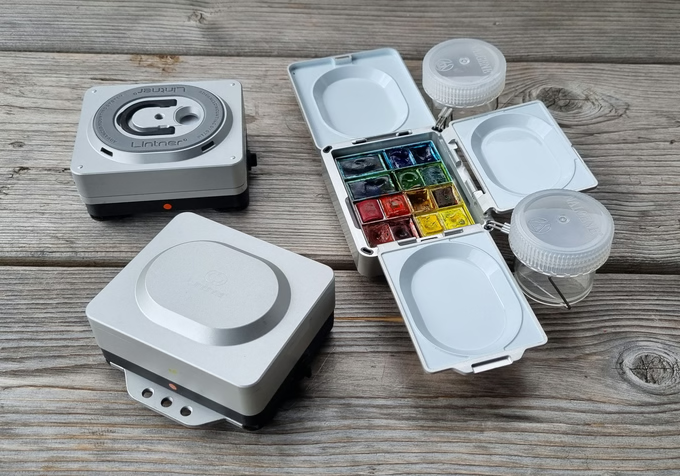
We structured the work in two layers:
-We created the first Kickstarter presentation video
-We produced an ongoing stream of Instagram content where we could pressure-test the message in public.
That approach gave us two advantages: we could refine the story before launch, and we could see in real time which ideas actually mattered to working artists.
The Challenge
As we rolled out Instagram reels showing the system in real use, we watched how people responded in the comments. Most of the feedback was enthusiastic. But we did see a handful of “I’ve already solved this” replies, like “I can just clamp my setup with a magic arm.”
–Some artists felt they had already hacked the problem using clamps, brackets, or improvised rigs. many painters had normalised the struggle.
–Others believed that the awkward parts of painting on the move, holding everything in one hand, dealing with bad angles, fighting glare, worrying about spills — were simply part of the process.
What we realised was that we weren’t just selling “better hardware.” We needed to show artists that the discomfort they’ve quietly adapted to for years and have accepted as part of the process, is optional. That changed how we approached the Kickstarter video. It could not just show the product. It had to make the difference undeniable adopting a more in-your-face approach.
The Clipboard Mode is an excellent example:
Clipboard mode. You dock the Lintner Box directly to the board. The palette and water stay level and secure, while the sketch surface can tilt independently. No spills. No sliding pans. No cup balancing. You can work one-handed, totally stable, in public.
Mounting Flexibility. The same clipboard setup can be handheld, fixed on a mini tripod, or clamped to a railing, chair, table, even a tree branch. You get a stable, hands-free painting surface in almost any situation. Instead of adapting your body to the paintbox, the Lintner Box adapts to wherever you are.
Glare control. If you are getting sun glare off the page, you just adjust the angle of the drawing surface. Your paper moves. Your palette and water don’t. A normal paintbox can’t separate those two planes.
Wet wash to detail. You can drop the board to a shallow angle and flood the page for a wash, then immediately bring it back up for controlled line work without re-staging your palette or moving your water.
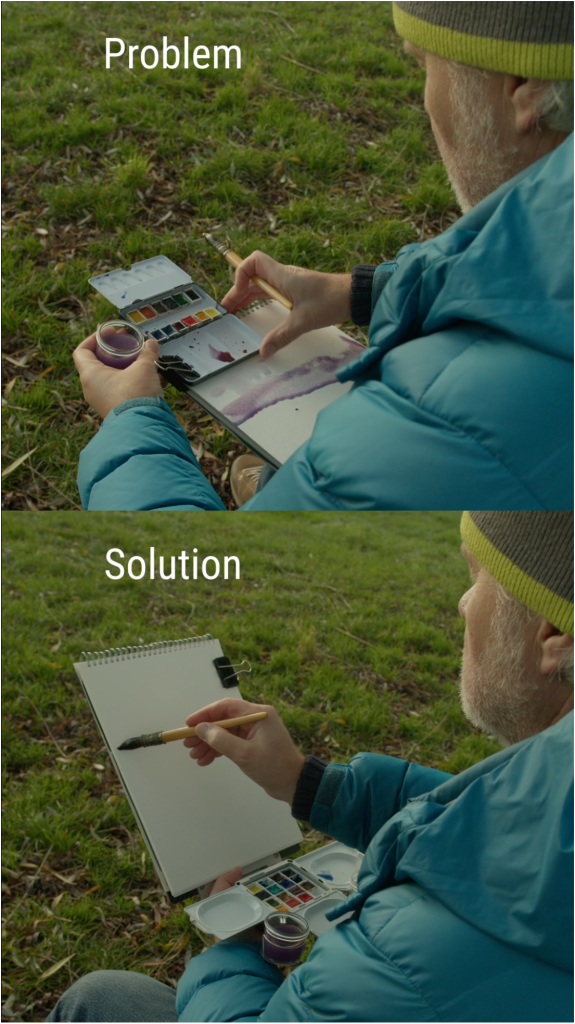
No clamp-and-arm hack gives you that kind of independent control. That is not a small difference. That is workflow. We needed to communicate that through visuals focusing on one core story: the Lintner Box is not just a paintbox. It is part of a modular mounting system that gives you a stable, hands-free workstation wherever you are.
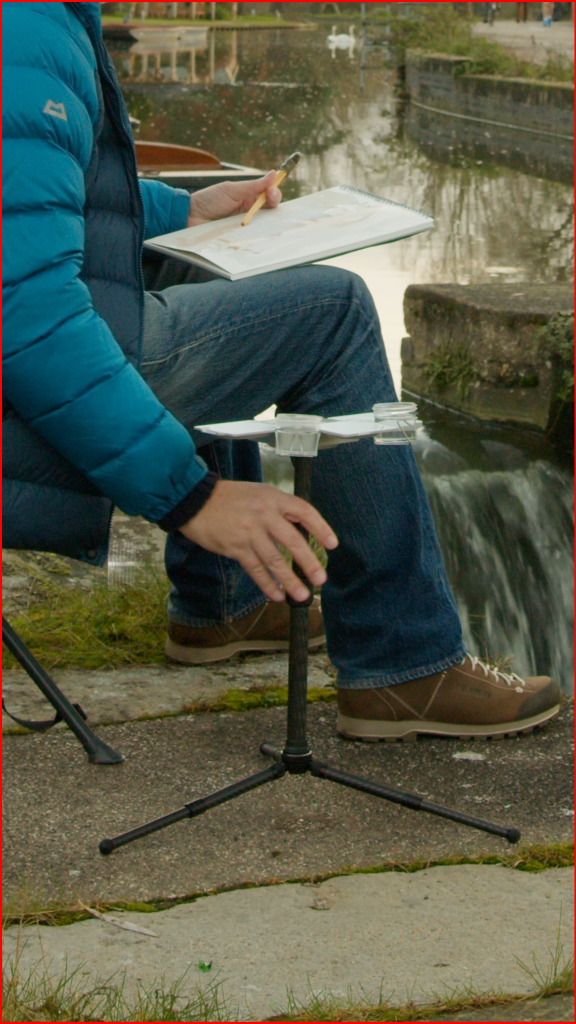
From there we defined success criteria for the video. It had to show the kit being used in real locations and make it obvious why this is easier than juggling a normal paintbox. It had to communicate that the product is a system, not just an accessory. And most importantly, it had to make working artists think, “This would actually make my sessions less stressful.”
Each of these demos quietly delivers the same message: you’ve been putting up with this for years, and you don’t have to.
Founder On Camera
As we iterated, we also saw something else: posts featuring Phil (Lintner’s founder and designer) talking directly to camera consistently outperformed pure product beauty shots. Those clips drove stronger engagement and more saves, which is exactly the behaviour you want leading into a crowdfunding launch.
Why that mattered:
Credibility. Gear for painters can look like a gimmick. Hearing the founder and designer explain why each hinge, dock, and mounting plate exists reframed the Lintner Box as serious, considered kit for working artists — not a novelty. It established expertise and authority.
Clarity. Phil talks like a painter, not like a marketer. He doesn’t pitch “features,” he explains “here’s why your wrist won’t hate you after 40 minutes.” That tone directly shaped the Kickstarter presentation.
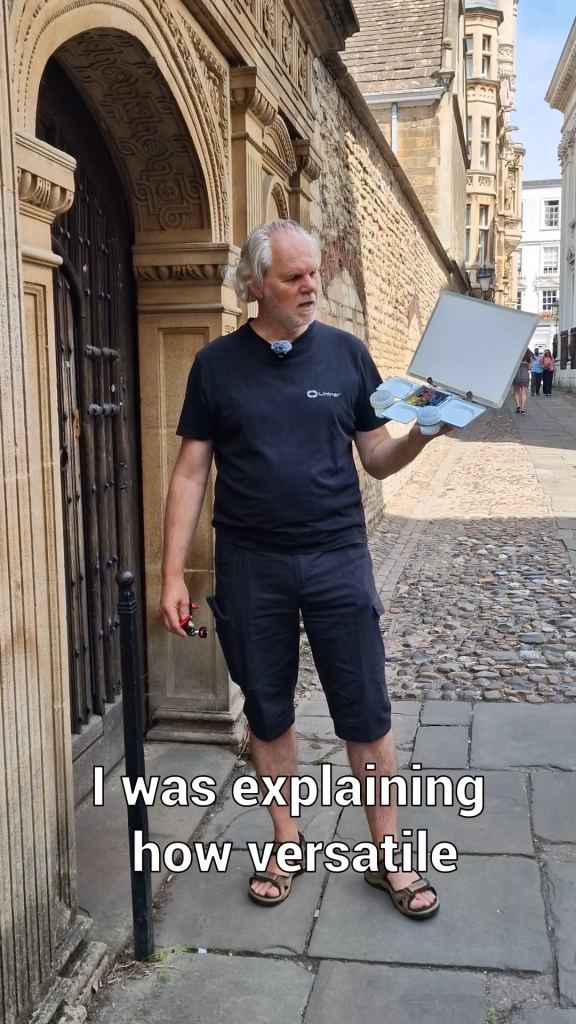
So we leaned into Phil as a guide. Later shoots put him on camera, demoing the system in real time and narrating the thinking behind it — not just “here’s the hinge,” but “here’s how you stop contorting your body just to keep your palette steady.”
That directly influenced the final Kickstarter piece. Instead of a faceless glossy montage, we built a founder-led, real-world walkthrough of how the Lintner Box and its modular mounting system actually function for painters and sketchers on the move.
How We Shot It
We shot the campaign in the kinds of environments real artists actually work in: outdoors, in public, seated on benches, standing on location. No fake studio setups pretending to be “urban.”
Visually, the approach was intentional. Lintner is speaking to painters, so composition and framing still mattered. But we didn’t want it to feel like a hyper-polished commercial. Nicolas (director and DP) leaned on mostly handheld and shoulder-mounted shots to keep the viewer grounded and close to the experience. We mixed in the occasional slider/gimbal shot but kept the overall edit simple and honest.
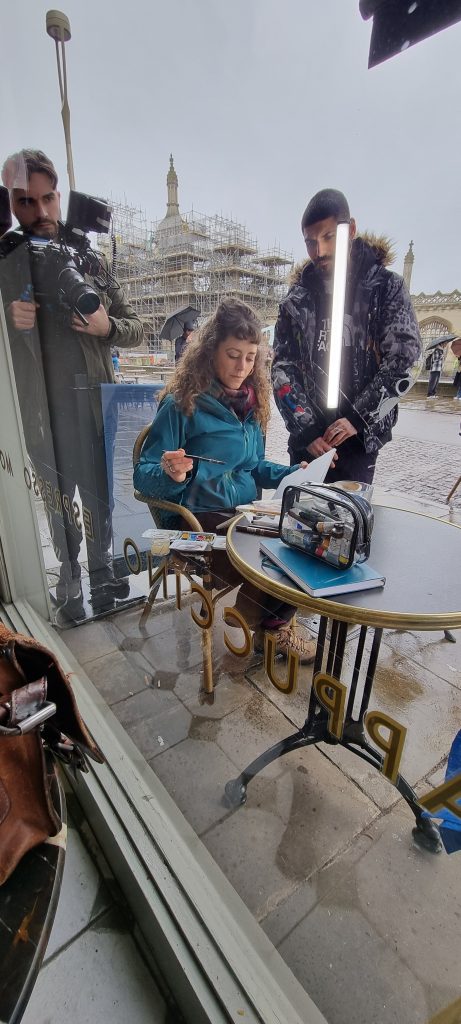
The goal was to show the product exactly as it works in the real world, not to dress it up.
Considered imagery without over-styling is what makes the footage feel believable to working sketchers. It looks good, but it also feels real.
In summary
Over the course of production, we listened to audience objections in real time and pulled out the pain points artists had been treating as normal. We then showed, in real use, how the Lintner Box and its modular docking system solved those exact problems, from handheld clipboard setups to tripod, seated, standing and travel scenarios. We deliberately leaned into the founder’s voice, because it built trust and clarity, and we folded everything we learned back into the Kickstarter video.
By the time we delivered the final Kickstarter piece, the story was no longer “here’s another paintbox.” The story was that the Lintner Box is part of a modular, hands-free system that lets you set up and paint anywhere without fighting your gear. That positioning, combined with a genuinely thoughtful product and very committed founders, helped the campaign attract more than 500 backers and raise over £150,000. – Visit their Kickstarter Page


